A Train to Nowhere
I parked my car where the locals do — that is to say, I left it on a muddy sidewalk along a pothole-infested road.
I parked my car where the locals do — that is to say, I left it on a muddy sidewalk along a pothole-infested road. I’d driven for two hours, winding through the mountains to reach a town whose better days were clearly behind it. Punctuating the mood, thick grey fog sat heavy over the dark five-story apartment blocks lining the street.
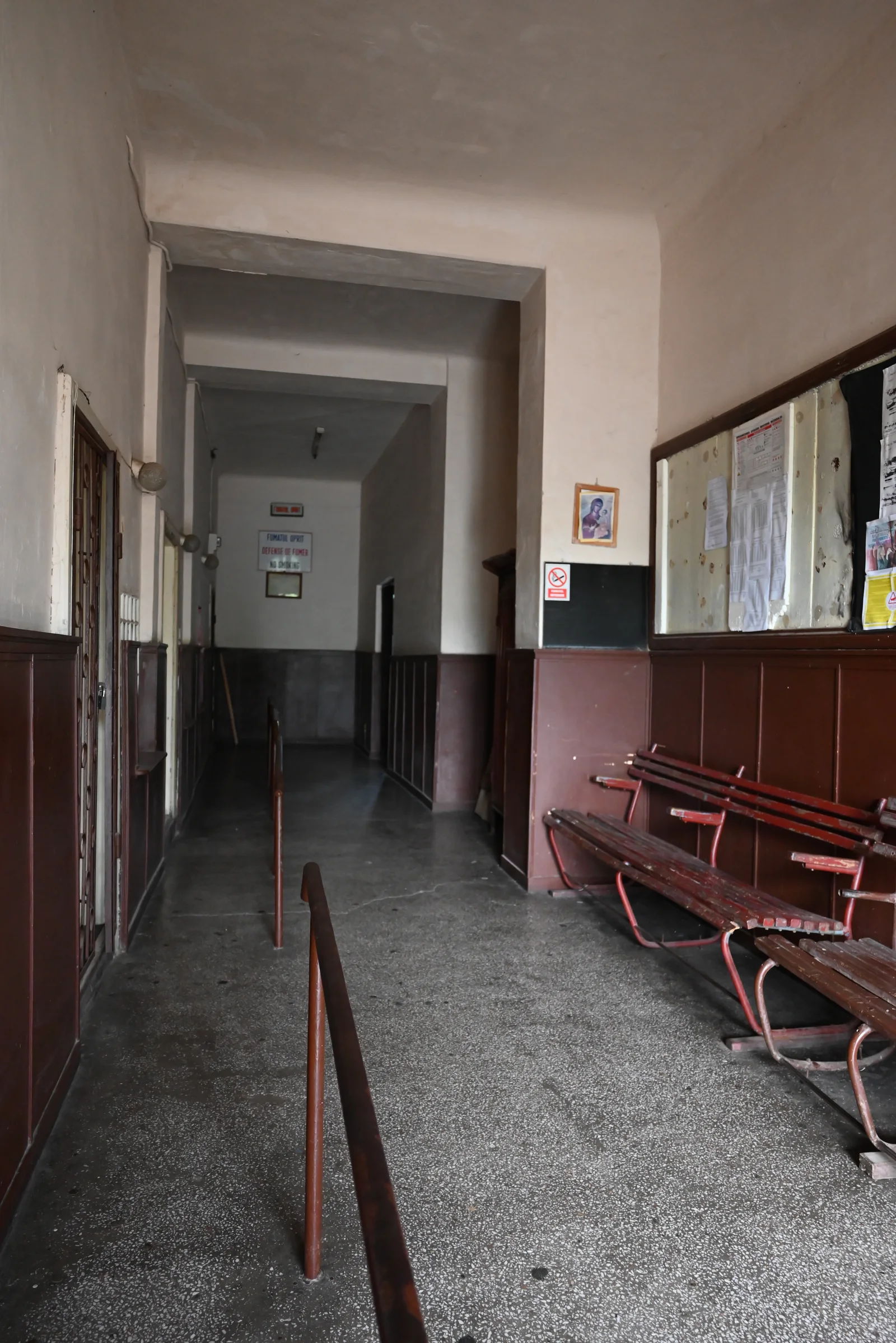
The main entrance of the train station was locked and disused, so I walked up the stairs around to the trackside where I spotted a gentleman in a railroad uniform reclining on a bench. I suspect he was in his early 60s, with a bad limp and eyes that gazed lazily in both directions, never quite meeting mine.
To my relief, he confirmed that the train (there was only one) would be running today and we stepped into his shadowy office. He labored over his keyboard, methodically hunting for each letter of my name.
“I’ve been with the railroad for many years,” he said, tearing the warm ticket from the printer and handing it to me.
“And before that?” I asked.
“I was in the army. Communist times.”
“You must have some interesting stories,” I offered.
He looked up and gave a short, humorless smile. “During that time, the rest of my family escaped to the West,” he said. “What the communists put me through — only they, I, and God know.”
He switched the subject, telling me about the uranium and coal mines that used to operate along the line, as we walked towards the employee bathroom which he unlocked for my use. As my eyes scanned that musty, dimly lit room adjacent to the station building, I noticed a shower in the corner, with a bath towel hanging from a towel bar…perhaps this station was his home now.
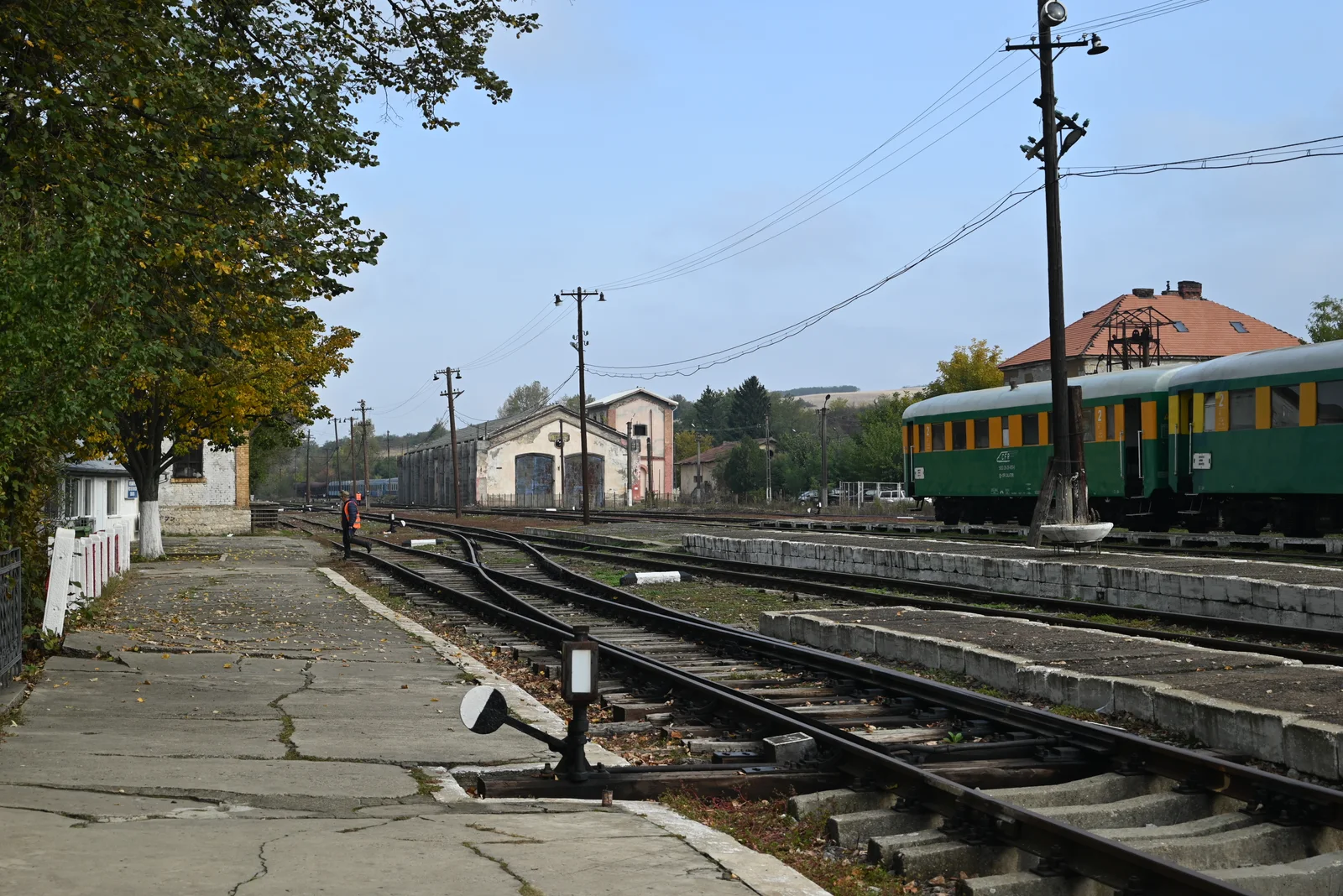
The train was quickly assembled, consisting of two green-and-yellow cars pulled by an old diesel locomotive in the same colors. It would carry the seven of us (five passengers and two employees) up into the mountains, taking around two hours to cover just 34 kilometers. Climbing on board, I walked back past the coal-burning stove and settled into one of the wooden benches as we set off.
Some minutes later, the conductor appeared to scan my ticket, a surprisingly modern touch to this otherwise antique experience. He was a character of an entirely different sort from the station manager – immediately asking me if I liked wristwatches. “Let me show you pictures of my collection,” he said, fumbling with his phone until he found his pictures. I oohed and aahed with appropriate enthusiasm as he scrolled through one Soviet-era pocket watch after the next. He then immediately rolled into his other collections: wall clocks, thermometers, radios… I quickly began to realize that Gheorghe was perhaps less a discerning collector and more a compulsive accumulator who just couldn’t resist bringing one more object home.
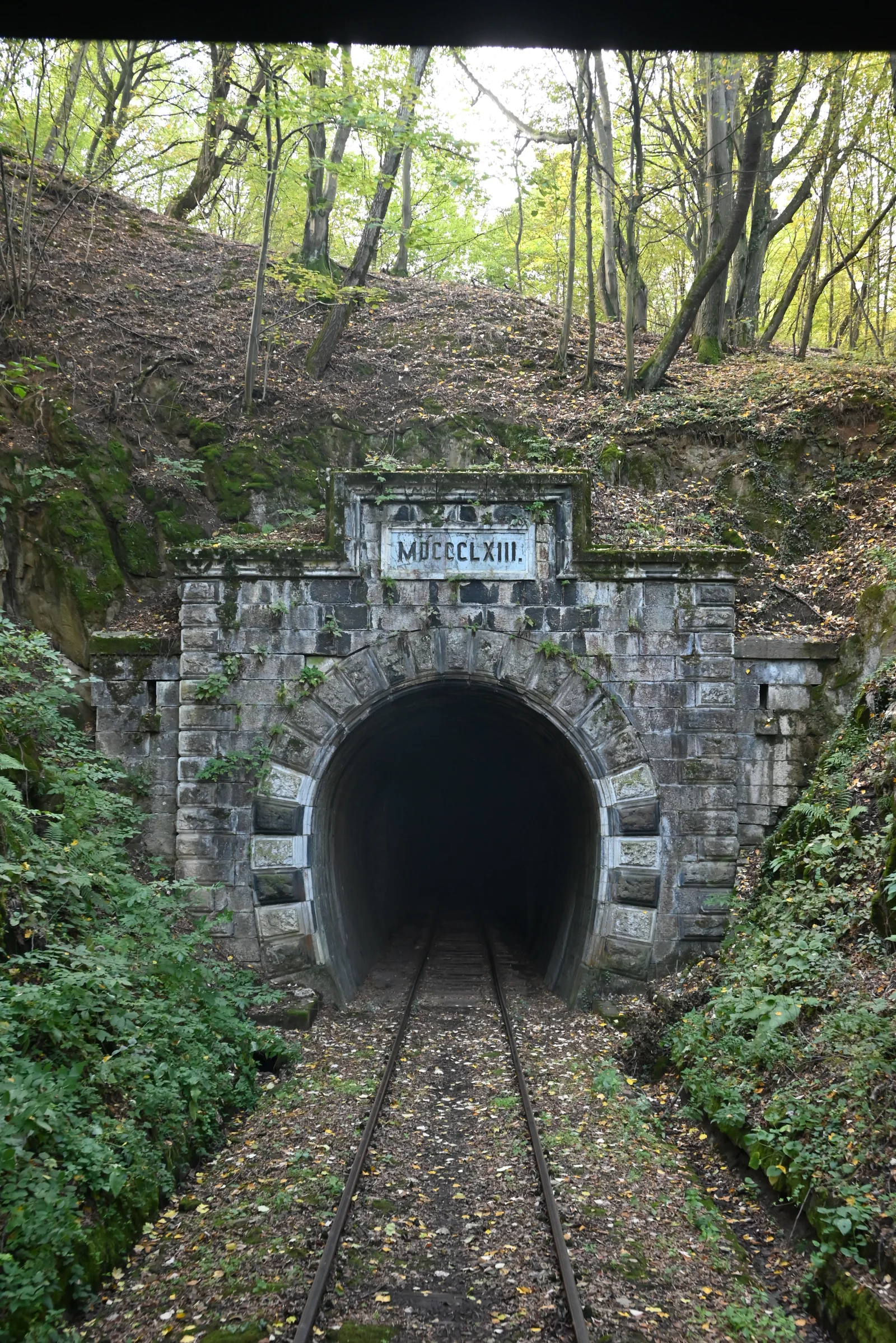
He understood that I was there to document our trip, so he walked me to the rear vestibule of the train car and showed me how to unlock and open the doors of the train while we were moving so I could get clearer photos. Gheorghe also showed me which switches to flip on the rusted electrical panel if I wanted the lights on or off during our longer stretches in tunnels, of which he reminded me there were fourteen. These hand-dug tunnels have their own legends; one of which claims that when the final tunnel was dug in the wrong direction, everyone involved was shot dead on the spot and left in the side of the mountain.
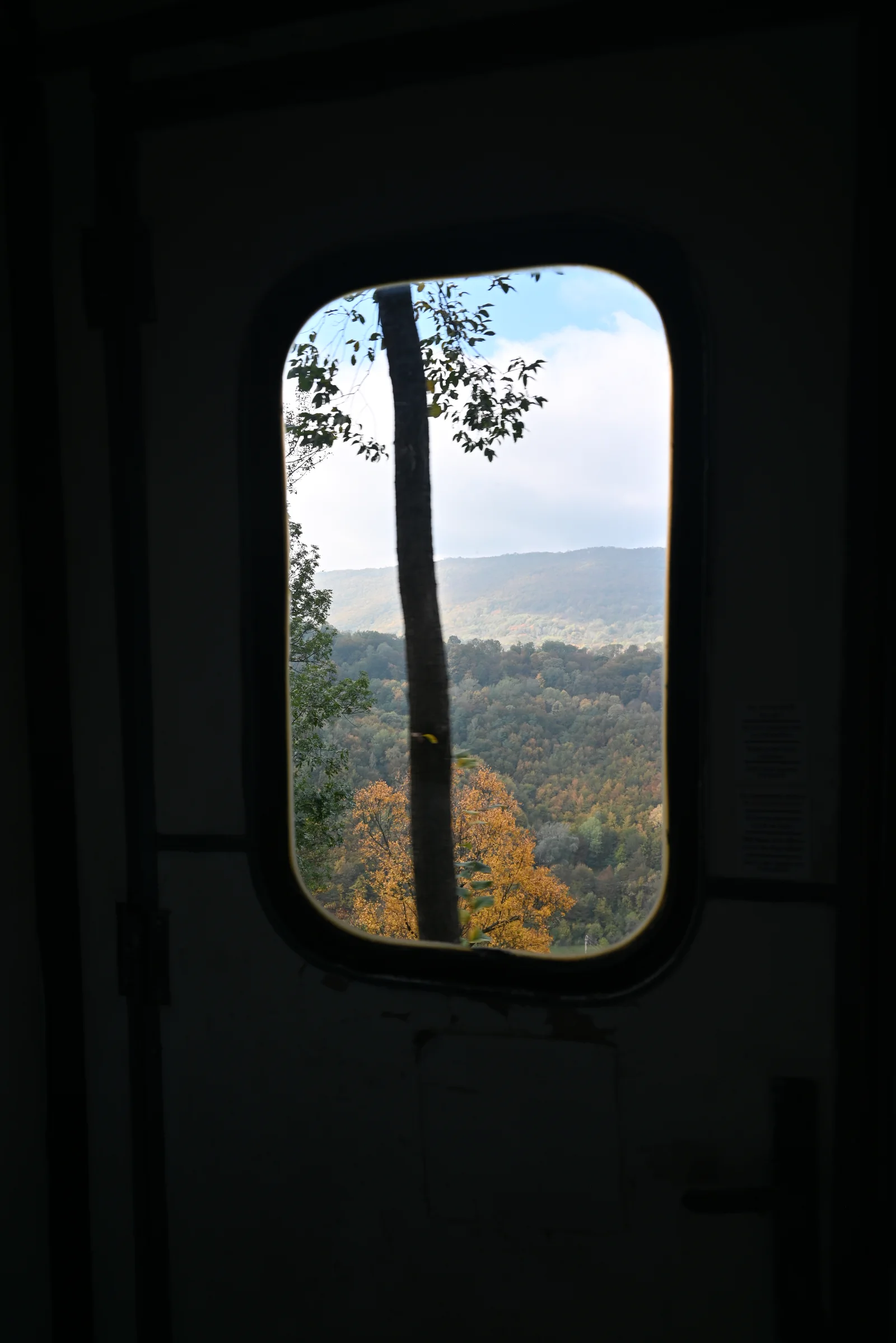
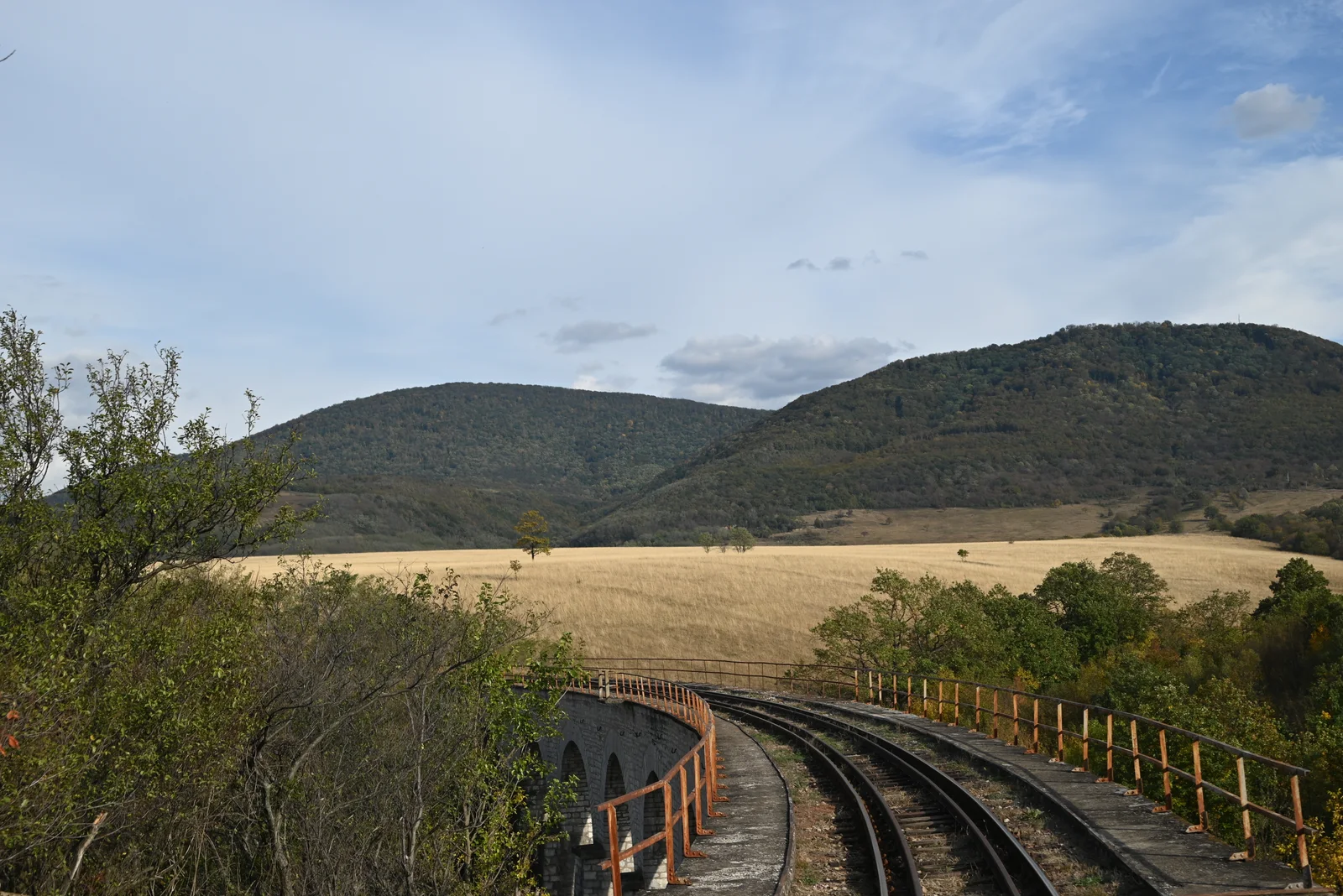
We climbed and climbed at a snail’s pace, through narrow tunnels which quickly filled with choking diesel smoke, past deep ravines, over rattling viaducts sporting small tricolor flags. Every so often the trees would open up and you’d get a clear view of the deep valley and early-fall colors climbing up the next mountain. There were a few stops on our journey at little villages, though it was sometimes unclear if any inhabitants remained. At one point where the terrain flattened out, a farm dog followed us for a few hundred feet, trotting along, curiously looking at me as I poked my head out the open back door.
Our destination was no grander than our starting point, though undoubtedly more picturesque: a hilly former mining town with its own dwindling population after the final mine closed around 2006. We had about two hours before the train would start back down the mountain, so I made my way to the only restaurant I could find on my weak cell signal.
As I sat and ate, two women across the street attempted to wrangle fallen leaves into piles with twig brooms, laughing as the wind scattered them faster than even their best efforts. I was soon joined in the restaurant by the other passengers from the train — it seemed this little pizzeria was the place to be. Children rode past on bicycles and the occasional car passed by. The drive between these two towns now took 40 minutes at best; the train was an old relic for us who had nothing better on our schedules.
Pulling away from the station once more, the mood in second class had shifted. A tour group of Romanian-Germans joined us for a one-way scenic route, occupying many of the empty benches. Gheorghe played the host, attempting to show off his various photographs. In our short stop he had managed to buy a partially working radio which he insisted was incredible quality and could easily be fixed — though I had some doubt it ever would be.
One of the Romanian-Germans stood with me in the rear vestibule for some time, watching the world go by through the doors I had re-opened. She talked quietly about her child, work, and what it meant to come back to this valley for a few days.
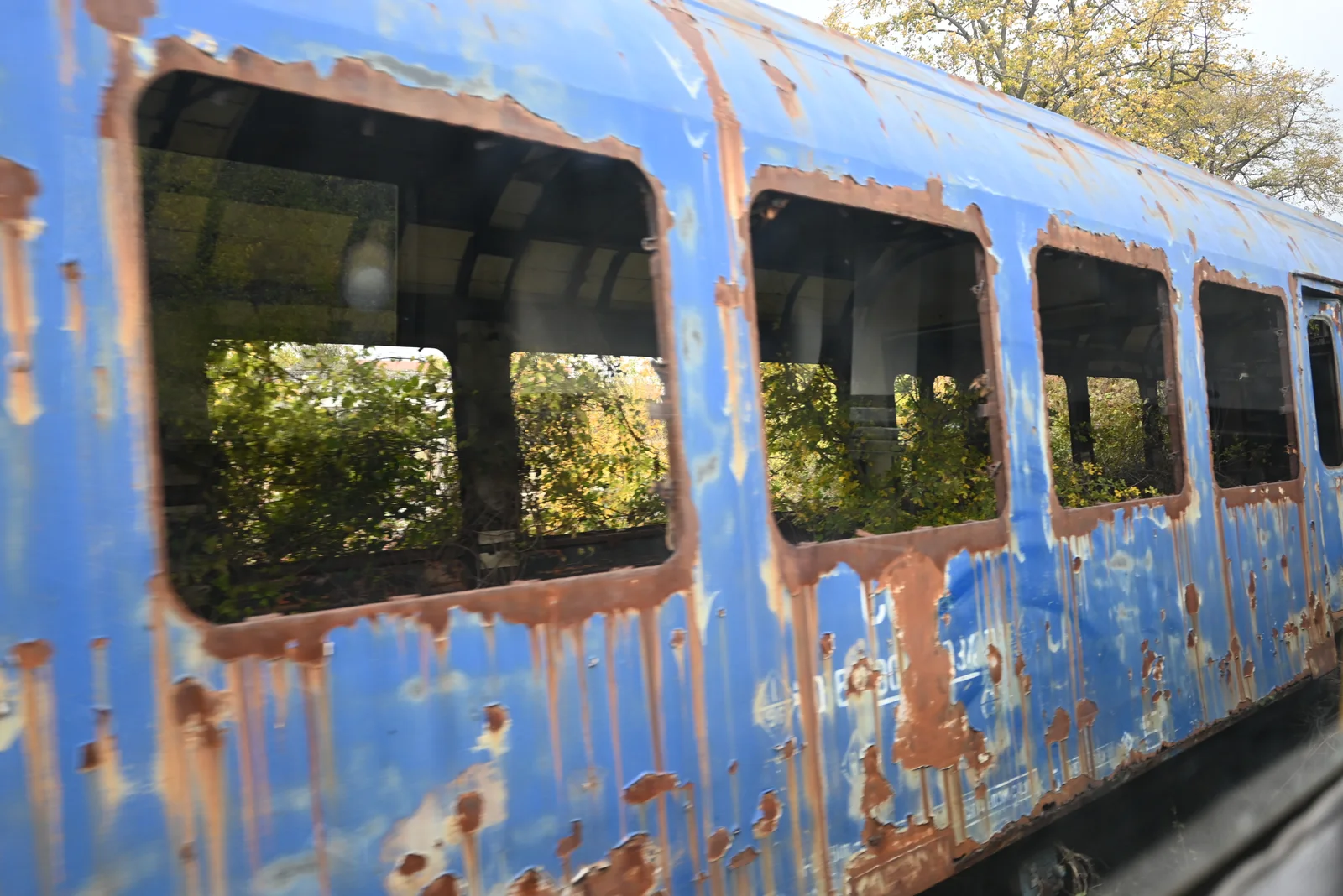
The journey back went by quickly — too quickly. The shadows grew longer as the same fourteen tunnels swallowed us and spit us back out. When we passed by the rusted-out shells of once-operational train cars, I knew we were nearing our starting point. I wondered how many journeys this train had left in it, and hoped that a similar fate would not soon befall our yellow and green train cars. I stepped down onto the same cobbled platform, past the same sagging station building, along the same muddy sidewalk full of cars.
The train had successfully taken us around the middle of nowhere and back again, another short chapter of this decades-long ritual.
The next week, in what felt like a different lifetime, I stood in Milano Centrale station, watching the electronic board update with lines and times. Crowds of people streamed around me, hundreds on the move from Venice, Rome, Zurich…
I walked to my platform and climbed on board a shiny red high-speed train, taking my seat as the on-board screen displayed announcements, weather, advertisements. The train left precisely on time and quickly hit our cruising speed. At nearly 300 km/h, the landscape doesn’t just pass by, it shoots by. Yet inside the cabin all is calm — I sip on my coffee and fill a page of my sketchbook as the gentleman next to me speaks quietly on the telephone.
The speed is intoxicating and slightly unnerving: in under two hours this train will cover 304 km to Florence and drop me back into the late October sun. Yet sitting here, I think of Gheorghe, somewhere up in the mountains, attempting to show off one collection or another to the handful of passengers who boarded. The station manager too — shuffling through the dimly lit hall.
From the speed of my current seat, you wouldn’t be able to spot them. But they’re still coupling those green and yellow cars, still flipping the light switches in the tunnels. The world is full of these small rituals that continue, not because they make sense, but because someone hasn’t yet decided to stop.
Thanks for reading! Subscribe for free to receive new posts and support my work.