Stranger at the Gate
A short story and a reflection.
As I pressed the buzzer at the gate on Street A, Number 14, two thoughts crept forward from the back of my mind. What would I say in this foreign language if someone showed up — or, more fundamentally, what was I even hoping to find? Unlike other recent stops in the weeks I’d been traveling, this one wasn’t simply for tourism.
You see, my father grew up on Street A half a lifetime ago. He, his brother, his parents, his grandparents — they all lived at Number 14. When they fled communist oppression in the early 1980s to the United States, another family occupied the home, and presumably they still did. After 1989, my grandparents were able to visit their native country a few times. On a couple of these trips, they visited Number 14, as did my father, a pilgrimage of sorts. There I too found myself, at the gate, hoping to see someone whose face and name I didn’t know.
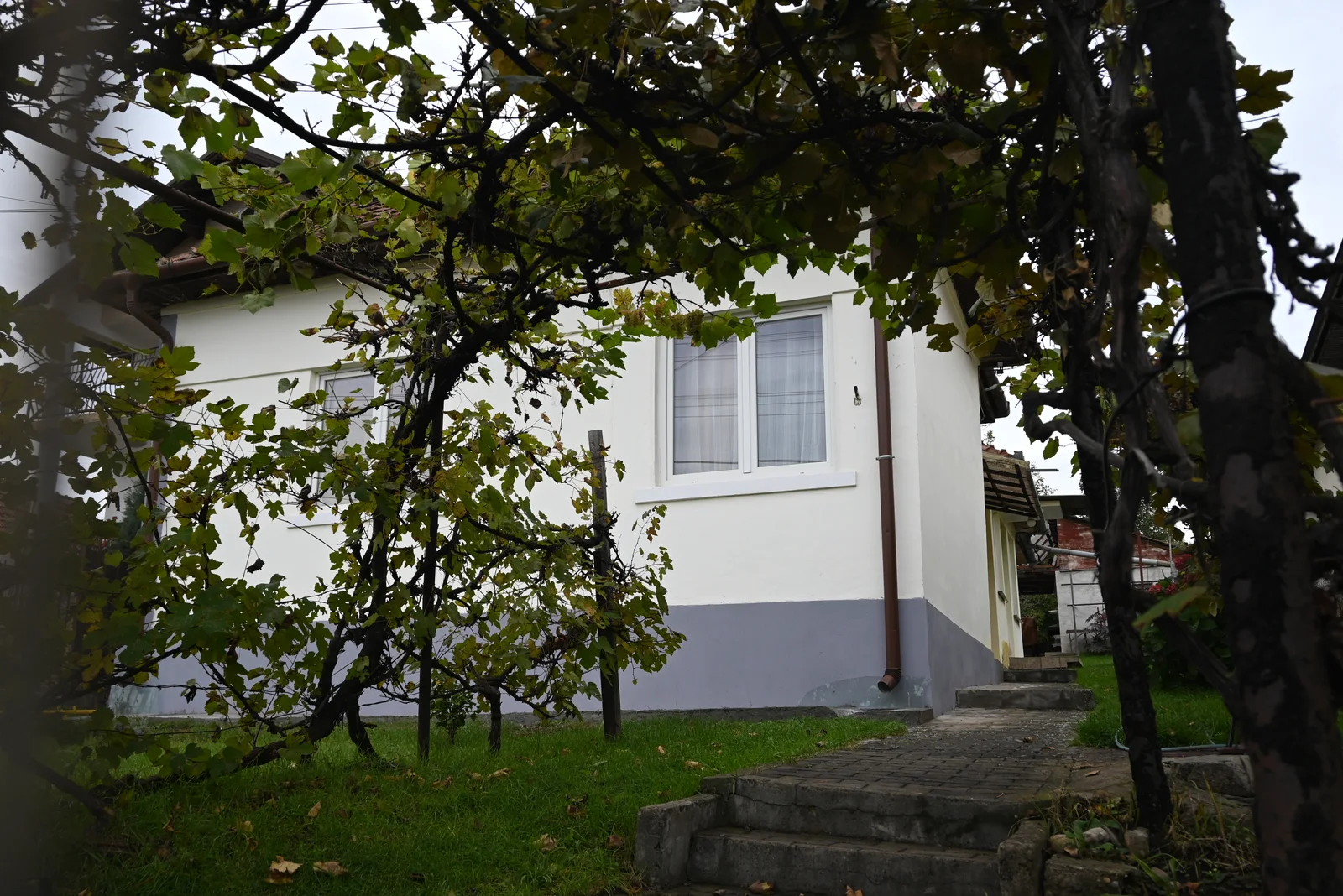
Past the brown steel gate and through the vine-covered trellis above, I could see the house, sporting a coat of white and grey plaster. Unlike the houses next to it, there were no modern additions — no second floors or garage doors. A narrow courtyard ran the length of the house on its right side, and I could almost see a glimpse of the large garden I’d heard of.
An elderly woman appeared from a distant doorway and took a few hesitant steps toward me and called out “Na, spuneți” — effectively, “well, tell me.” As I did not have the foresight to plan a speech, I stumbled through my still-healing second-language skills, explaining that I had a favor to ask. I just wished to step inside the gate and take a photograph of their house so I could have my own memory of a place that my family once called home.
She looked at me, puzzled, and asked me to repeat the names of the people I referenced, and I obliged. We stood there staring at each other, two complete strangers from opposite generations and sides of the planet. I realized my story might not be resonating with her and considered what the most socially acceptable method of exiting the conversation would be. But then, something changed — her eyes lit up and Maria remembered.
As I walked up the steps behind her, Maria’s husband poked his head out of another side door, eyeing the stranger now inside the gate. Before he could venture a question, Maria put him to work, telling him to show me around.
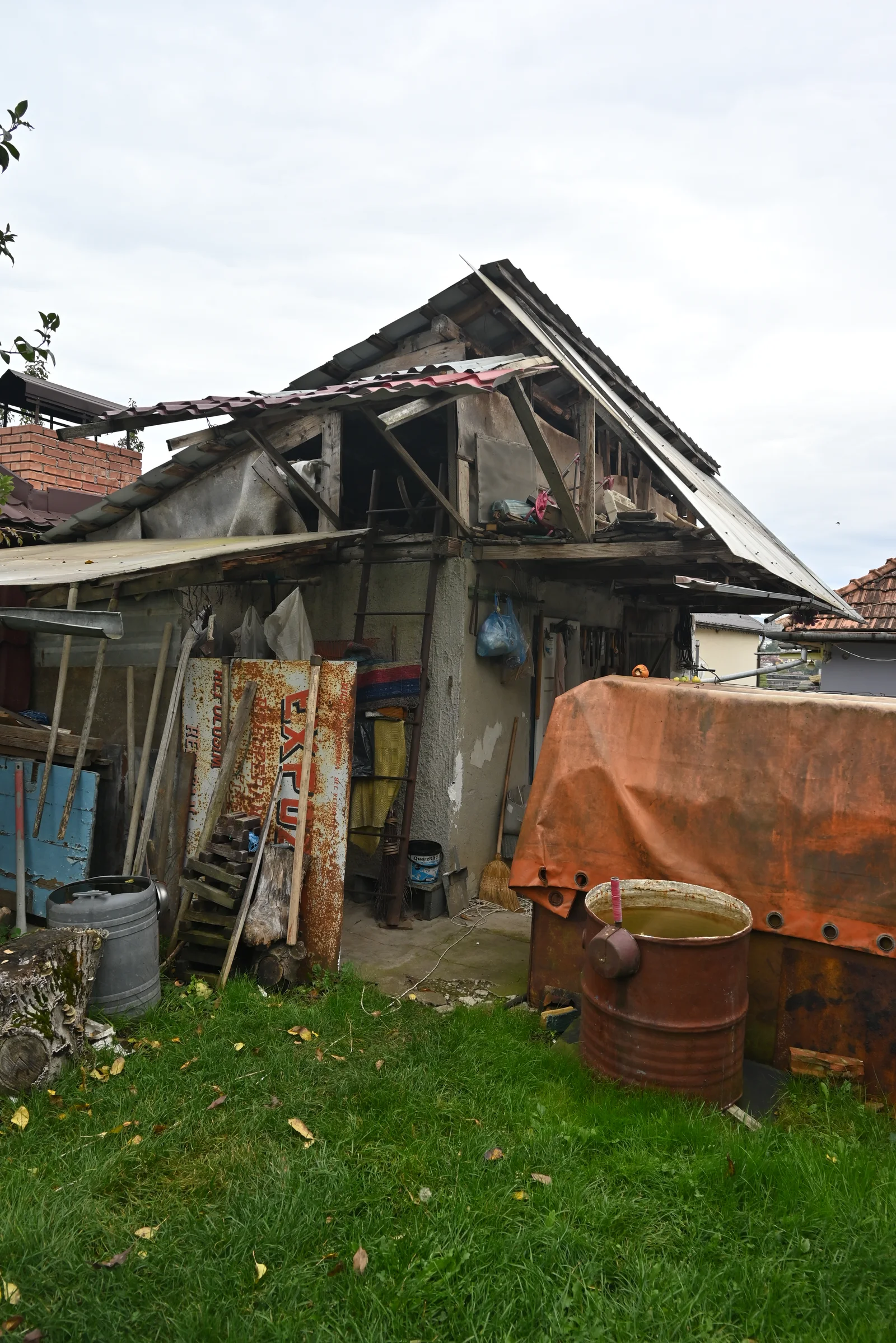
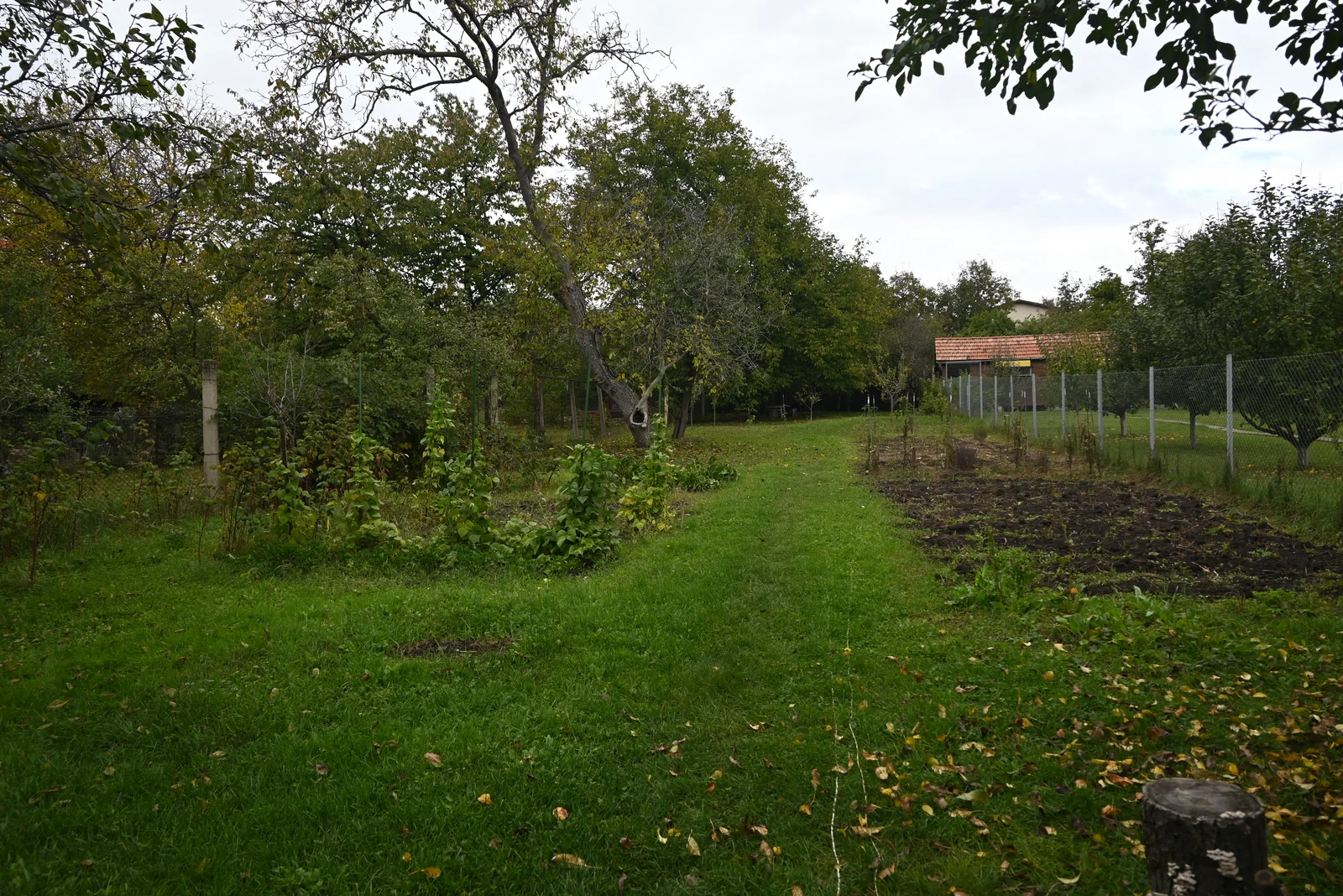
The garden behind the house was narrow but stretched at least a couple of hundred feet, lined on both sides with plots that held vegetable plants in the summer: beans, peppers, tomatoes. Other rusty odds and ends were scattered around, not to mention a couple of drums holding rainwater — something I vividly remember seeing as a child in the yard of my grandparents’ house in the Midwest. The yard was also home to a weathered shed with a tin roof and a large walnut tree, both introduced to the property by my ancestors.
We then stepped inside and he gave me a tour around their modest maze-like house. Originally two separate living spaces, the house had since been merged into one. Each room led directly into the next without the formality of hallways. China cabinets sat full of tricolor ribbons, crosses, photos of friends and family. Rolled up rugs slumped lazily against walls, envying their peers selected to adorn the floors. Relying on heat from tiled masonry stoves placed in between rooms, the house was quite cold, but each room became progressively warmer as we moved toward the kitchen. Maria’s husband kindly pointed out historical remnants as we walked along — a door here, a chandelier there.
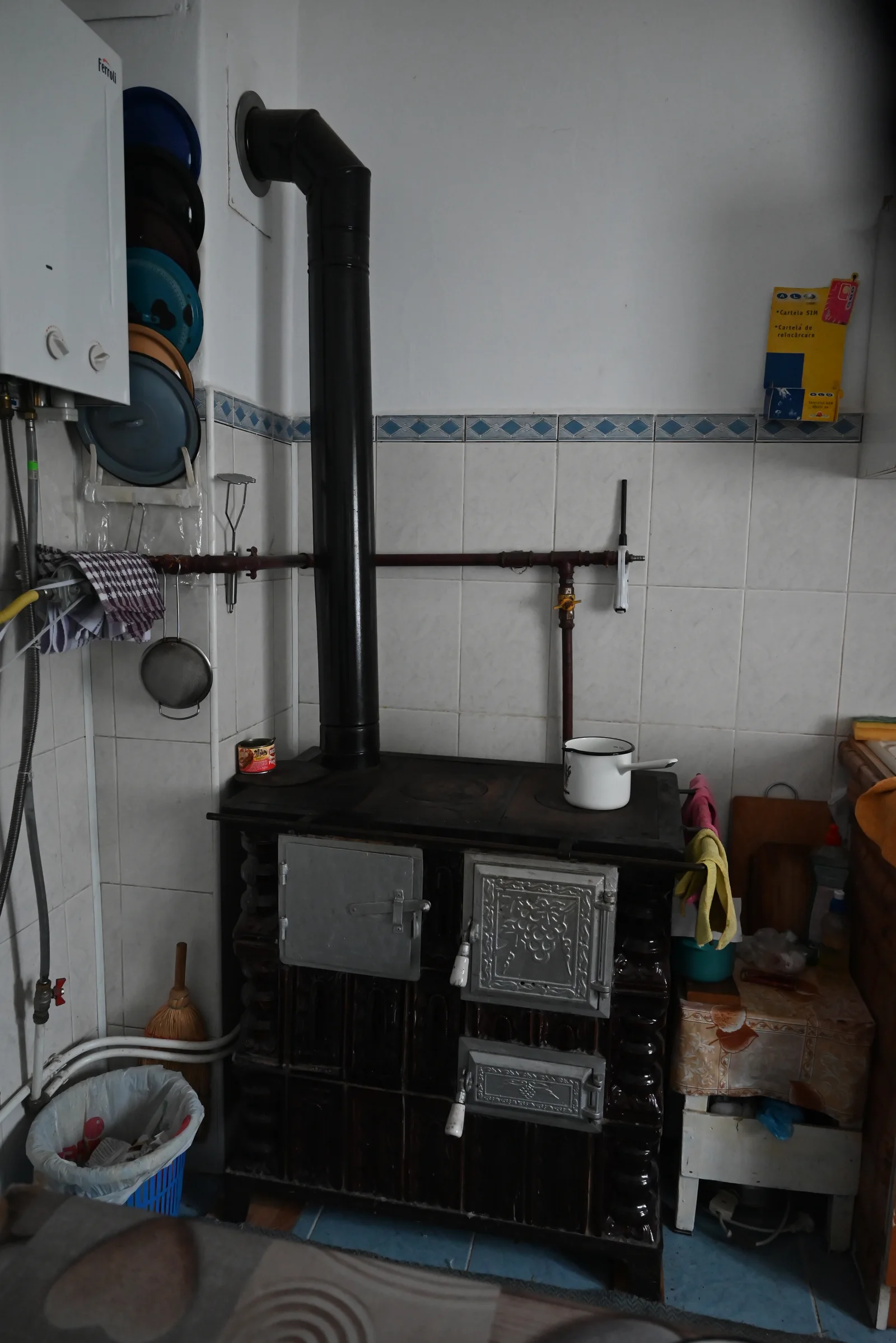
The kitchen was typical for this sort of house, complete with a black iron stove, a few two-tone cabinets, a small TV playing some Liga II fotbal match, and a couch to watch it from.
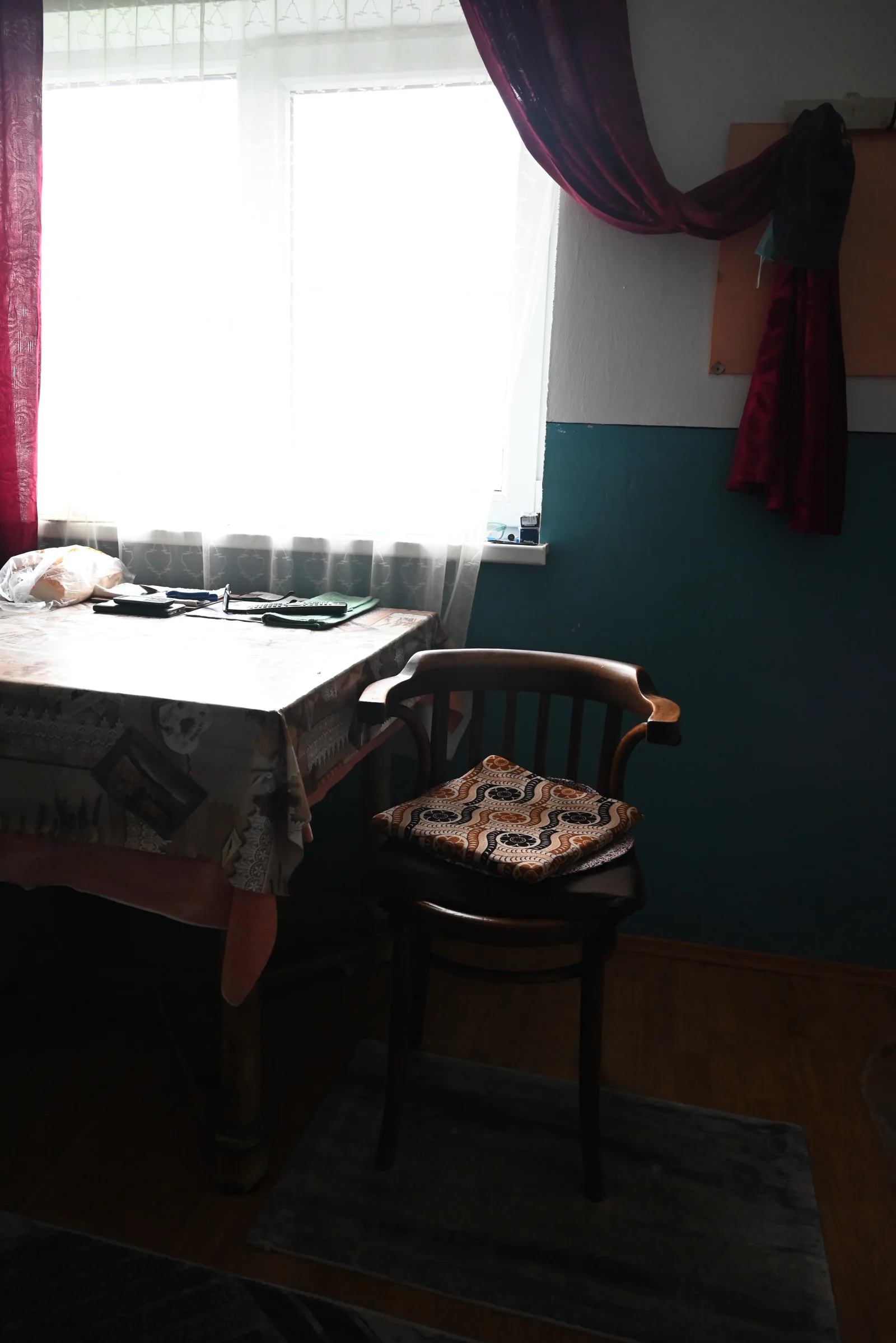
By this time some white dishes were set out on the table, one with red peppers, one with a sliced sausage, one with cheese, one with bread. Maria insisted that I sit — I would not be allowed to leave Number 14 without a full stomach. Her husband dexterously procured an unlabeled bottle from the cupboard and poured me a small glass of palincă before occupying a place on the couch facing me. I sat in a wooden chair which my great-grandfather had built with his own hands. It was apparent to me that Maria and her family seldom got outside visitors; this felt like the main event of their week, or perhaps their month.
Between my limited grasp of their country accents and their complete lack of English, it was a wonder that we managed to pass the better part of an hour chit-chatting as they watched me eat. We worked our way slowly through their memories of my grandparents, what life is like for them on Street A, what grew in the garden this year, and my sojourn back to Europe after many years stuck in the States. One of their sons appeared on his lunch break during our conversation and sat down quietly, joining the audience for the show.
After I’d eaten all I could, we sipped on dark coffee warmed from the stove, which Maria could scarcely believe I preferred without any sugar. Looking out the window toward the courtyard and garden, I couldn’t help but feel a gentle somberness. Sitting in my grandparents’ house for the first time, I wondered if either of them would have guessed I’d ever be there. Though they had passed years ago, memories of them surrounded me — from the physical objects they left behind to the unexpected warmth and hospitality from people who were strangers mere minutes before.
When I finally had to take my leave, Maria told me to wait a moment and disappeared back into the maze. When she returned, she presented me with a hug, a warm invitation to return anytime, and a gift — a tea towel she had sewn, something to remember them by when I got home.
In one final act of hospitality, Maria compelled their son to drive me back halfway to my accommodation, as she and I walked arm in arm to the front gate once more.
I made my way back toward downtown along a busy sidewalk, early-fall coolness in the air and the smell of fresh plăcinte drifting out of a doorway. Only then, walking alone, did I manage to slip away into my mind for a few quiet reflections.
It struck me how strange it was to feel at home here, yet I did. I’d grown up in the Midwest — grade school, university, graduate school, and subsequent employment, all within about 30 miles of each other. Yet traveling alone in Europe is what has shaken loose this old question of where it felt like home is. Generations of ancestors whose names I hardly knew were born, lived, and died in these places on the other side of the ocean where I’d just renewed my dual citizenship.
I passed shawarma shops with throngs of students on their lunch hour, chatting and laughing loudly. I passed Gothic churches, standing since before Westerners even discovered America.
Faith tells me that my true home isn’t on this earth, providing an eternal perspective which lightens the importance of the question in my mind. But walking through the center square with Maria’s white-and-blue tea towel in my bag, still I can’t help but feel that I’m not clear on where my earthly home is, or where I want it to be. It’s not as simple as where I grew up and reside, nor is it as simple as where my ancestors grew up and extended family still lives. Perhaps pieces of home are scattered across the distance separating the 8 time zones between the Midwest and Eastern Europe.
I’m going to send the residents at Number 14 a postcard from the U.S. as I think it’s the only form of thanks they would let me get away with. I don’t know the time or context when I will be back on Street A — but it will be soon, I hope.
Thanks for reading! Subscribe for free to receive new posts and support my work.