The Time In-Between
A series of shorter fragments from my time in Europe during Fall 2025.
1. Reserved
The platform was crowded but quiet at Munich’s Central Railway station, early morning floodlights bearing down on us. At last the empty train pulled in, and I climbed aboard, mechanically copying the motions of those ahead of me: stowing my bag, shrugging off my jacket, and settling in for the seven-hour journey to Budapest. Only then did I notice the small displays above the seats. To my surprise, many read: Reserved, Reserved. I realized my fate.
At the next stop, the doors opened and the aisle filled again with travelers. My jet-lagged eyes scanned the new crowd until a pair looked back at me. The woman said something to me in German — polite, brief, and unmistakably certain. I did not understand a word, but I looked up at the screen and it made sense anyway: the seat I’d occupied had also switched to Reserved. I apologized, gathered my things, and moved.
Not long after, this dance repeated itself, at which time I found myself seated next to someone whose constant coughing convinced me to walk up the train to the dining car.
No matter how modernized a train looks, the dining car still feels like a holdout from another time. Planes fly by overhead at five hundred miles per hour while our Austrian “Railjet” rattles along at perhaps a fifth of that speed, offering the small luxury of sitting down at a communal booth with an espresso as the hills roll by. The miniature spoon clinked against my cup as we moved through the picturesque borderlands, allowing my mind to relax and wander in a way it never does on airplanes.
For a moment I imagined myself as a minor character in a Dostoevsky novel — a tired traveler crossing the continent by rail to settle uncertain family matters in a distant city.
2. No Shade
Petőfi Sándor Park was one of my favorite places in Oradea, and I have many specific memories from strolling through it over the years. The triangular patch of greenery sat tucked away not far from the downtown walking street, and gave me the feeling of escaping into a hidden shaded sanctuary. It wasn’t pristine, but that was part of the point. The path was surrounded by tall unkempt trees and hedges that walled off the city noise — the whole place felt overgrown in a quiet, intimate way.
Sadly, when I walked toward it in the Fall of 2025, I barely recognized it. The sprawling fortress of greenery was gone. In its place: mowed grass, a few saplings, and a visibility so total I could see straight through to the buildings on every side. The park hadn’t been “ruined,” exactly — there was a new playground and some new gravel paths running through it all, but it was emptied of the elements that made it a sanctuary.
Oradea has done a great many things well, and has not lost its character: restored facades, re-paved streets, renovated hospitals, etc. But there’s a kind of modern progress that mistakes newness for beauty, and these changes don’t just alter the view.
In time, the new saplings will grow. I hope I’m able to see the park when shade returns to its paths.
3. Eibenthal
The little map on my phone seemed to indicate my destination wasn’t far, but not having service, everything was relative. After the turn-off, the road narrowed to just one paved lane, winding through the forest for some 15 minutes. The only vehicle I saw coming the other way was a hearse, and I politely pulled as close to the side as I could and waited for it to pass.
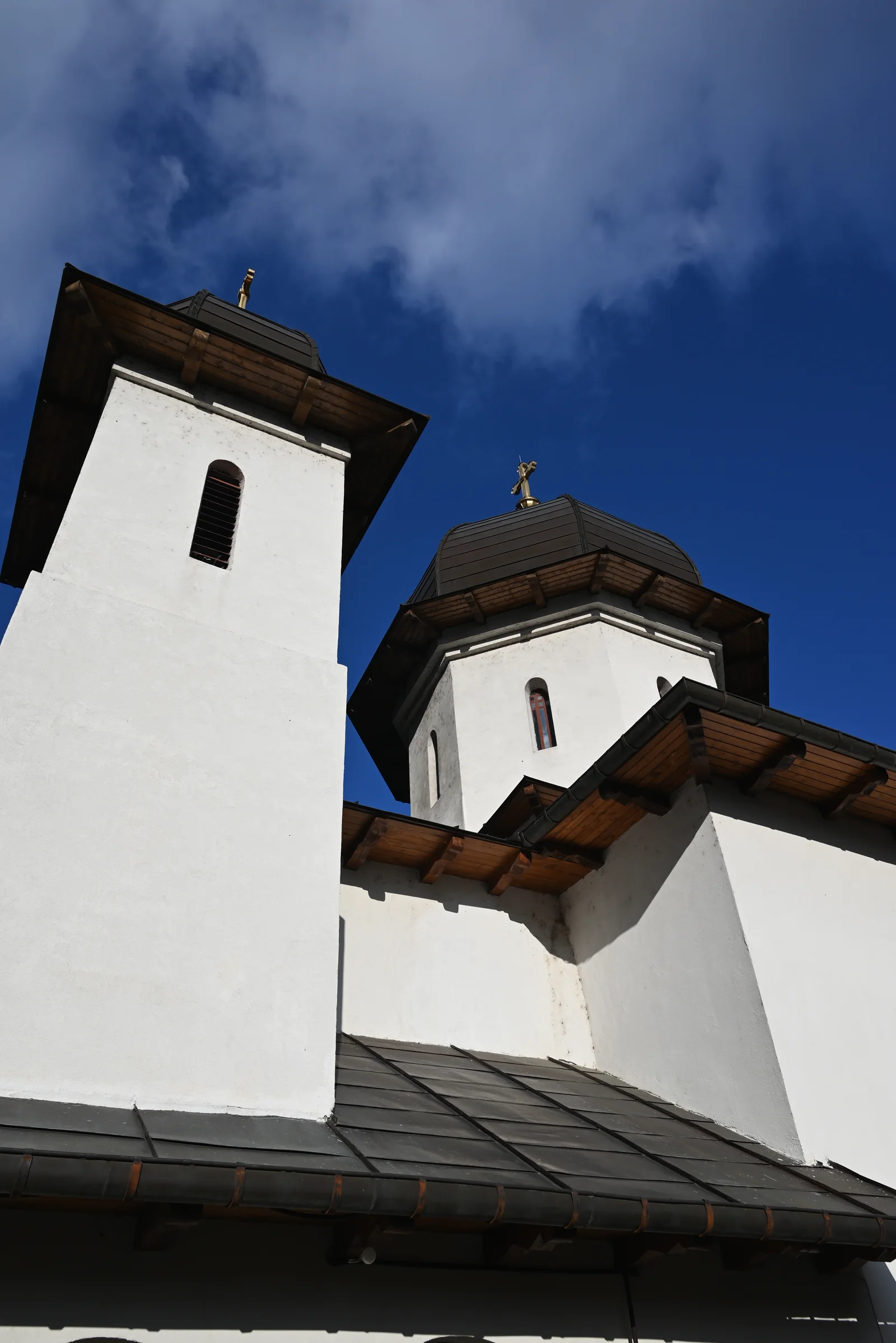
Eventually the road spit me out in this anomalous place called Eibenthal: a Czech village, in Romania, near the border with Serbia. It wasn’t strange in the way I imagine a theme park is — just a sleepy old village in the mountains, tucked away like a sheep that snuck in with the cows, not wanting to be noticed.
I parked my rental car along the main road and poked my head into the only restaurant in town, ordering some form of goulash and watching the slow village life out the window. A couple of others filtered in and out, but it seemed none of us preferred the same language.
After lunch I stepped back outside. The air was warm and still, the sun high overhead. Hidden dogs barked at me from behind tall gates lining the street. Not having much of a plan, but not wanting to leave yet, I walked down the main road and began up the steep embankment, following a dirt track toward the town cemetery. As I walked higher, I turned back and could see how small this village really was, home to a meager population of no more than 300.
As I walked up, I realized there were many walking back toward me, dressed in black, and I remembered the hearse. I slipped through a side gate of the cemetery but kept my distance. Many were lingering from the service that had clearly just concluded, moving slowly from one grave to the next, reminding themselves of friends or family long passed, placing an occasional flower. My camera stayed in my bag and my sketchbook remained tucked in my pocket, but I somehow never found the moment to take them out. I walked through a few rows myself — some of the older stones were tilted slightly forward, their lettering softened by weather and moss. I followed the others back down the hill.
Back in the car, I realized I had almost no photos of Eibenthal, which felt strangely appropriate.
4. Birds
The light over Cluj was growing dimmer as evening set in. At first there were just a couple of specks streaking across the dark blue. As we walked, their number multiplied, until there were swarms of the black birds. We paused in awe — they laid siege to every ledge and gutter on the rooftops around us, calling to each other in their sharp song.
A few moments later, without warning, the leaders of the formation decided it was time to move along. Dark waves of them took off and swirled overhead — with a coordination that made the sky look as if it was inhaling and exhaling. Below them, the shop windows had already gone dark, and the first streetlamps began to bathe the cobbled pavement in orange light. We lingered there longer than we’d meant to, staring upward, watching the sky clear.
If it wasn’t so late, I’d have liked to follow them…
5. Second Class Language
The announcement went on for what felt like a full minute in German. I can imagine it was probably helpful. Immediately following it was the Hungarian version, equally verbose and equally unintelligible to me. Then there was a pause, a crackle of the speaker, and the English version arrived, simply: “The next stop is _____…”
I shook my head and smiled to myself. The longer detail wasn’t for me, whether it was about our delay or a new meal on offer in the dining car — and that was fine.
In Budapest I visited an art supply store that was nestled just below the street level near a downtown university. The shop was narrow but neatly stocked, shelves full of paints, brushes, pencils. I found a small black sketchbook that claimed to have been made back in Indiana. At the register, I remarked in English that the detail made me feel like I was back in the Midwest. The clerk looked back at me, puzzled, and shook her head in a way I understood all too well. She didn’t know my language, and I smiled to myself all the same. We parted ways with one of the few Hungarian words I know: köszönöm (thank you).
On many days of that trip, English was a courtesy, not a default. And there was a small freedom in that — not having to absorb every detail before it became relevant.
6. Border Crossing
There was nothing romantic about the white shuttle van that took me back to Oradea. We pulled out of the Népliget parking lot and rattled over pothole-ridden ring roads until Budapest finally gave way to the flat Hungarian countryside, fields stretching in every direction beneath the September sun.
Inside the van, the air was stale and warm. Our driver ignored the signs for the new highway and instead wound us slowly toward the Romanian border along the same congested provincial road I’d traveled so many times as a child. My knees were pressed against the seat in front of me, but I considered myself fortunate not to be stuck in the back row.
Later, our driver pulled over for a smoke break in a small village. The sun felt hot, insects buzzing back and forth over the dusty pavement. I paced while he smoked: forty-three steps from our parking spot to the end of the pavement, and forty-three back.
Another hour later we approached the border. As a child I had crossed at Ártánd at least ten times, and almost every time the same ritual followed. American passport? That was a problem. Pull off to the side and wait. A nameless officer would slowly input our details into a computer, one key at a time, perhaps with a break or two in between, before inspecting the car.
This time, the van simply rolled right through the crossing, past both sets of now unoccupied booths. No ritual, no stamps, no customs officer flagging us down — just a slight bump in the road. Better, of course, than the old suspicion and delay, though there was something about that friction that made earlier arrivals feel more real.
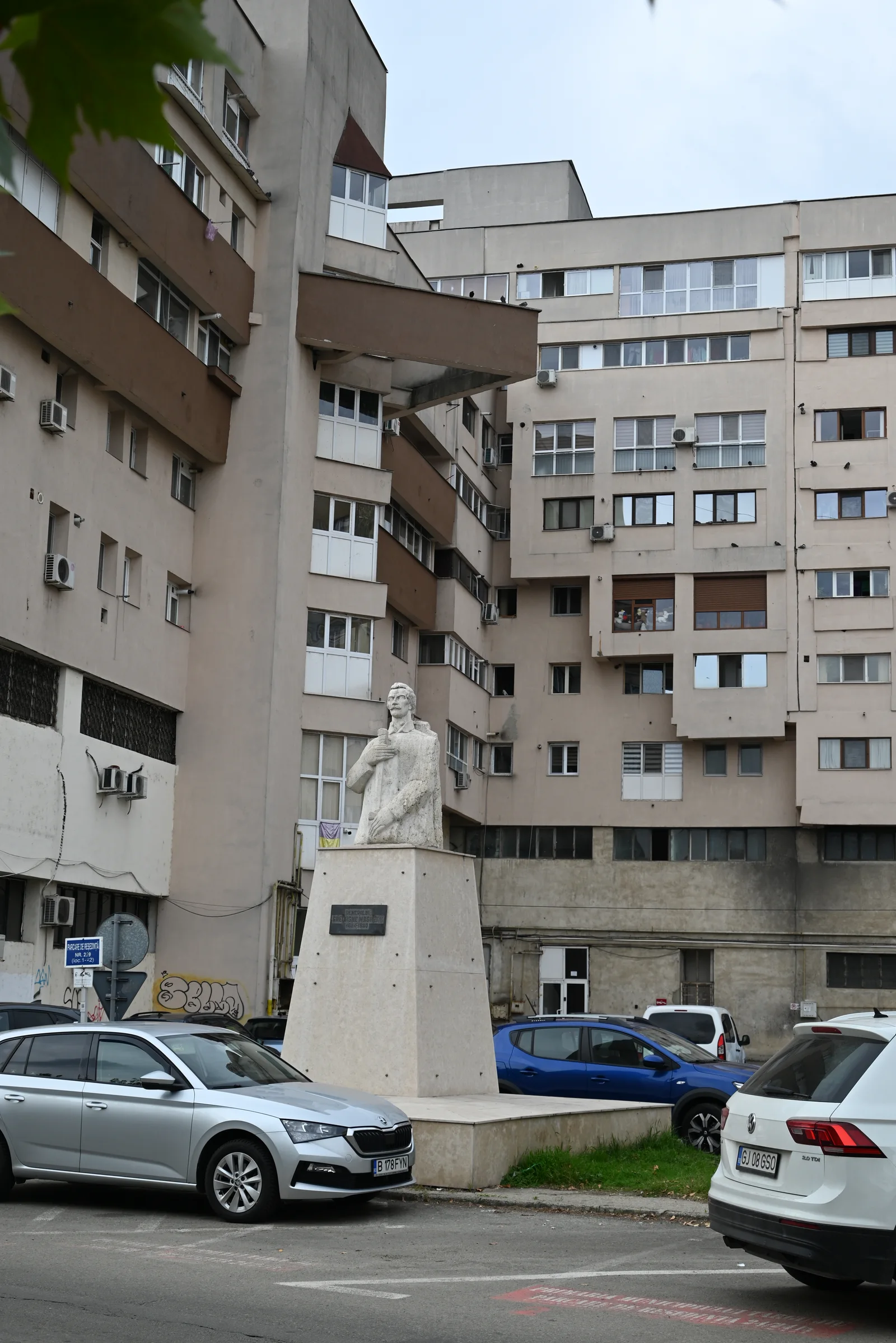
Not long after, we neared Oradea and passed through its industrial outer edges. I was the only passenger dropped off on a broad avenue lined with ten-story communist-era apartment blocks, their ground floors broken up by pharmacies, betting shops, and small grocery stores and bakeries. The van pulled away and I stood there with my bag in my hand, the feeling of arrival still catching up to me.
7. Santo Spirito
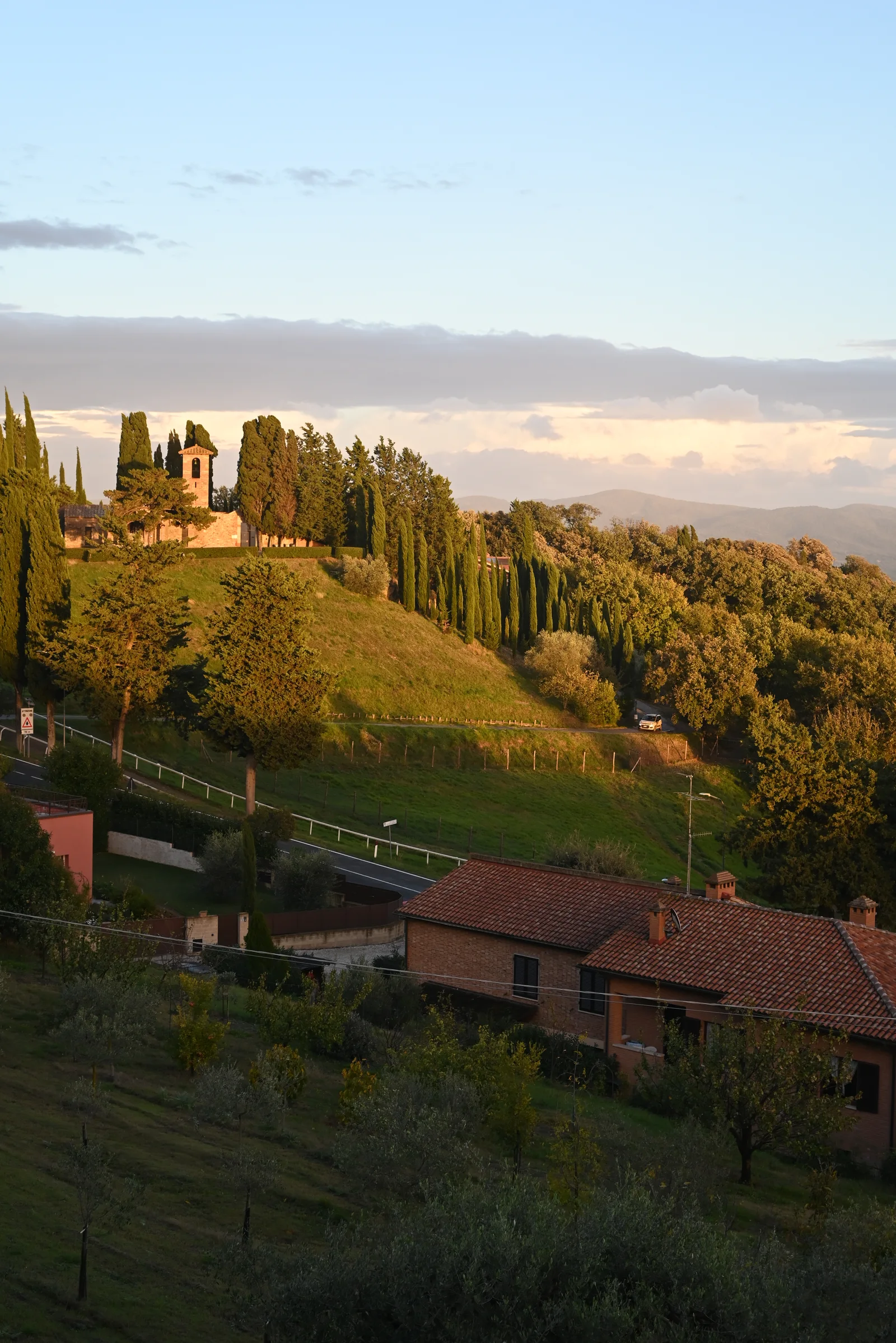
I sat on the steps of the church, lingering a while longer. Cafes and restaurants dotted the perimeter of the square. People sat gathered around flames, glasses clinking, gentle chatter and laughter floating into the cloudless evening sky.
8. Return
The parts of these experiences that have stayed with me most so far are the ones that felt almost mysteriously familiar — places and rituals that seemed recognizable even when they weren’t mine in any full sense.
That was true in cathedrals and football stadiums, on trains and in border towns, in old houses, public squares, and on quiet hikes through the mountains. I didn’t exactly encounter belonging, but something close to it, brushing up against places and lives that connected elsewhere on my family tree.
Since coming home, I’ve found it difficult to leave all that behind. Even on an average workday, answering emails or looking up from my desk at the late afternoon light, my mind still often wanders back: retracing my steps, reliving the specific feelings certain scenes left me with, wondering when I’ll go back, and for how long. That longing is not uncomplicated, though. I still dread the mechanics of the travel, and I am wary of putting pressure on a future trip to possibly outdo this one. Even so, the desire remains stubborn, and a return feels inevitable.
It is a strange thing to feel so at home in a place that is only partially yours. Stranger still is the thought that this may be precisely why it continues to call you back: not because it is yours already, but because some part of you suspects it still could be.
Note:
Thank you to anyone who has read any of my posts. Recounting and organizing my favorite memories from last Fall has helped clarify and direct what I’d like to try next artistically.
My painting output has slowed down quite a bit over these last few weeks, but I’m trying to accept this season for what it is — throwing paint at paper here and there, and trusting that opportunities for new inspiration will come. This blog will likely go quiet over the next few months until the next journey begins, big or small. Lord only knows when and where, but I hope it will be soon.